Essen Germany Watercolor City Map: A Designer's Review
When I first pulled up the Essen Germany Watercolor City Map on my screen, I wasn't just looking at a digital file; I was immediately visualizing the texture of thread against fabric. As someone who spends hours hooping garments and tweaking tension settings, my first impression of this Illustrations piece was its potential for storytelling. The watercolor aesthetic suggests softness and fluidity, which is a delightful contrast to the rigid, geometric nature of most city maps. For embroidery designers and small business owners, this design offers a unique opportunity to create something that feels less like a logo and more like a piece of art.
Visual Personality and First Impressions
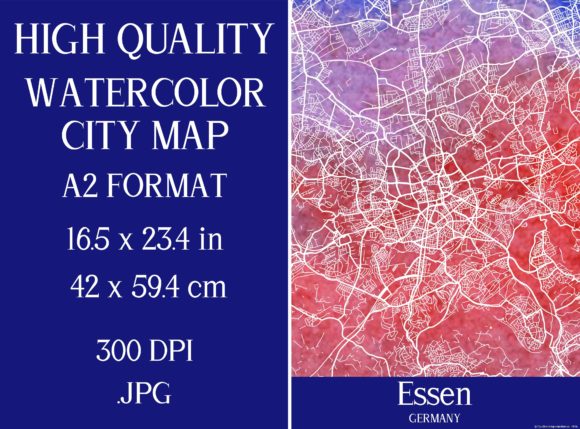
The mood of the Essen Germany Watercolor City Map is undeniably nostalgic yet modern. It captures the essence of the city without getting bogged down in hyper-realistic street grids that often turn into a muddy mess under a needle. The layout feels organic, with shapes that mimic brushstrokes rather than strict vector lines. This visual personality makes it an excellent candidate for projects where emotional connection matters more than technical precision.
For those of us selling handmade products, the appeal lies in how this design translates to physical media. The varying tones suggest a blend of fill stitch areas that can utilize gradient thread colors or clever blending techniques. It doesn't scream "mass-produced"; instead, it whispers "custom crafted." Whether you are an Etsy seller looking to expand your travel-themed collection or a hobbyist making a gift, the design's artistic flair adds immediate perceived value to the finished product.
Real-World Application: The Custom Tote Bag Scenario
Let's walk through a realistic scenario. Imagine a client approaches your craft business wanting a series of tote bags for a cultural festival or a boutique hotel in the Ruhr area. They want something sophisticated but recognizable. This is where the Essen Germany Watercolor City Map shines. I can picture this design centered on a natural canvas tote bag design, stitched with muted blues, greys, and perhaps a touch of warm ochre to represent the industrial heritage of Essen.
In this context, the design performs beautifully because the watercolor style forgives minor imperfections that might occur on textured canvas. Unlike a solid block of satin stitch which can pucker on loose weaves, the illustrative nature of this map allows the fabric texture to peek through slightly, enhancing the artistic effect. For a small shop product, this means higher customer satisfaction because the item looks intentional and high-end. It transforms a simple bag into a conversation piece about local pride and artistic expression.
Versatility Across Different Products
Beyond tote bags, the versatility of this machine embroidery design is impressive. Here is how I see it fitting into various product lines:
- Sweatshirt Embroidery: Placed on the back of a heavyweight hoodie, the map acts as a statement graphic. The soft edges of the watercolor style complement the cozy feel of fleece or French terry.
- Nursery Decor: For baby embroidery projects, such as a wall hanging or a crib sheet border, the gentle aesthetic is perfect. It avoids harsh lines, creating a calming visual for a child's room.
- Embroidered Patch: If digitized with a merrowed edge or a clean cut boundary, this could serve as a fantastic iron-on or sew-on patch for jackets and backpacks.
- Holiday Embroidery: During the gift-giving season, this design works well on kitchen towels or aprons for hosts who love travel or have a connection to Germany.
- Custom Apparel: On a denim jacket or a structured cap, it offers a unique alternative to standard text-based location markers.
Technical Considerations and Fabric Challenges
However, enthusiasm must be tempered with technical reality. While the Essen Germany Watercolor City Map is visually stunning, it demands respect regarding fabric choice and stabilization. The watercolor effect likely relies on varied stitch density to create those translucent looks. On stretchy fabrics like jersey knits, this can be risky. Without a robust stabilizer, the differing pull of the stitches could cause distortion, making the map look warped rather than artistic.
I would advise caution when using this on dark fabrics. Watercolor designs often depend on light threads to create depth. If the thread colors do not have enough contrast against a black or navy background, the details of the map will vanish. In such cases, you might need to adjust the digitizing to include an underlay that brightens the base or select a lighter fabric entirely. Similarly, very small hoop size constraints could clip important parts of the city layout. Always check the dimensions of the embroidery file against your intended placement area before committing.
Curved surfaces, like caps, present another challenge. The flat, illustrative nature of a map can look distorted if stitched over the front panel curve of a hat unless the digitizing has been specifically compensated for that curvature. If you are planning a run of caps, ensure you have a version of the design optimized for that specific application.
Enhancing Brand Value and Customer Trust
Using a high-quality design like the Essen Germany Watercolor City Map directly impacts your brand consistency and customer trust. When a buyer receives a personalized gift or a piece of custom apparel that features clear, well-executed stitching, it reinforces their perception of your professionalism. Messy details or poor color choices can undermine even the best marketing efforts. This design, with its thoughtful composition, helps elevate the presentation of your design assets.
For commercial embroidery projects, the uniqueness of this map sets you apart from competitors using generic stock fonts or basic outlines. It shows that you curate your offerings with an eye for detail and artistic merit. This level of care encourages repeat business and positive reviews, which are the lifeblood of any Etsy seller or independent maker.
Practical Notes for the Embroidery Designer
Before you start stitching on your final inventory, here are some practical steps I recommend taking with this specific design:
- Test on Scrap Fabric: Always run a test stitch-out on the exact fabric you plan to use. This reveals how the fabric texture interacts with the stitch types.
- Check Thread Contrast: Lay out your proposed thread palette. Ensure there is enough distinction between the shades to maintain the watercolor illusion without them blending into a single blob.
- Review Stitch Density: Look closely at the densest areas. If they feel too stiff or heavy, you may need to adjust the density settings in your software to improve drape, especially for wearable items.
- Inspect Small Details: Zoom in on the corners and fine lines of the map. Ensure that tiny elements won't get lost or cause thread breaks during the run.
- Mockup Verification: Create both color and black-and-white mockups. Sometimes a design loses its impact in grayscale, which is important to know for certain printing or branding contexts.
- Licensing Check: Crucially, confirm the licensing terms associated with the digital embroidery file. Ensure you have the rights to use it for commercial embroidery and selling finished items if that is your goal.
In conclusion, the Essen Germany Watercolor City Map is a compelling addition to any designer's library. It bridges the gap between digital art and tactile craft, offering a fresh take on location-based designs. With careful attention to fabric selection, stabilization, and thread choice, it can become the centerpiece of a highly successful product line. Whether you are creating a one-off personalized gift or scaling up a small shop product range, this design provides the artistic foundation needed to create something truly memorable.